

Just Accepted
Just Accepted Articles have been posted online after technical editing and typesetting for immediate view. The final edited version with page numbers will appear in the Current Issue soon.
Submit a Manuscript

Nonclassical growth of rod-like Ag nanoparticles in nanodroplet reactors
Guanhua Lin*, Moyi Xie, Jingru Liang, Lijie Lei*, Gang Chen
https://doi.org/10.1016/j.cjsc.2026.101034
Droplet reactors; Ag Nanoparticles; Nonclassical growth; Morphology transformation; In-situ TEM
ABSTRACT
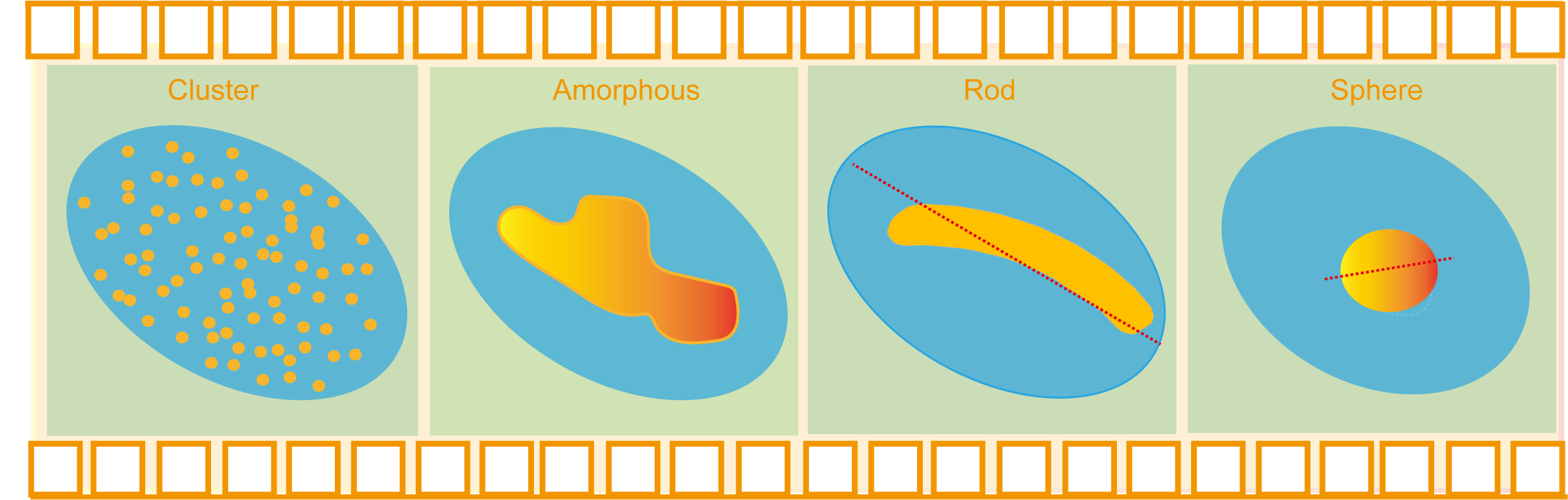
A comprehensive understanding of nanoparticle growth is essential for the design, fabrication, and applications of nanoparticles, as structure control is of critical importance in establishing their structure-property relationships. The high surface-to-volume ratio makes them prone to morphology transformation during synthesis process, which leads to the geometric structures of resulting nanoparticles to significantly deviate from the desired shape. However, tracking the morphology transformation of individual nanoparticle in bulk solution to elucidate the underlying mechanism remains challenging. Fortunately, droplets can provide an isolated space that allows the growth and morphology transformation of nanoparticles to proceed without interferences from surrounding environment. Herein, we have real time investigated the formation of Ag nanoparticles and their morphology transformation in EDTA (ethylene diamine tetraacetic acid) nanodroplets, their dynamics have been observed by using in-situ TEM (transmission electron microscopy) liquid cell technology. It has been found that these nanodroplets can induce anisotropic growth of rod-like Ag nanoparticles, and their morphology subsequently transform from high to low aspect ratio and even to sphere-like nanoparticles, as the short Ag nanoparticles have superior thermodynamic stability. To achieve shape control of rod-like Ag nanoparticles, surfactant molecules were introduced into nanodroplets to suppress this morphology transformation. Consequently, rod-like Ag nanoparticles are successfully fabricated and they display good SERS (surface-enhanced Raman spectroscopy) performance in detecting 4-mercaptophenol. In summary, our investigations provide a novel strategy for structure control and morphology transformation of metallic nanoparticles by using nanodroplets, and open a new way for morphology control of nanoparticles and droplet applications.




- Address: Fuzhou High & New Technology Industrial Zone, Shangjie, Minhou, Fuzhou, Fujian 350108, China
- Tel: (86)-591-63173769, 63173770
- E-mail: cjsc@fjirsm.ac.cn
CN 35–1112/TQ, ISSN 0254–5861, Online ISSN: 2949-768X Copyright @ 2022 Chinese Journal of Structural Chemistry-www.Chinese Journal of Structural Chemistry.net. All Rights Reserved 闽ICP备2022002645号-1