


High thermal conductivity in Ga2TeO6 crystals: Synergistic effects of rigid polyhedral frameworks and stereochemically inert cations
Ziyi Liu, Feifei Guo*, Tingting Cao, Youxuan Sun, Xutang Tao, Zeliang Gao* Submit a Manuscript
Lin Zhang, Chaoran Li, Thongthai Witoon, Xingda An*, Le He
Chin. J. Struct. Chem., 2025, 44(4), 100456. DOI: 10.1016/j.cjsc.2024.100456
April 1, 2025
ABSTRACT
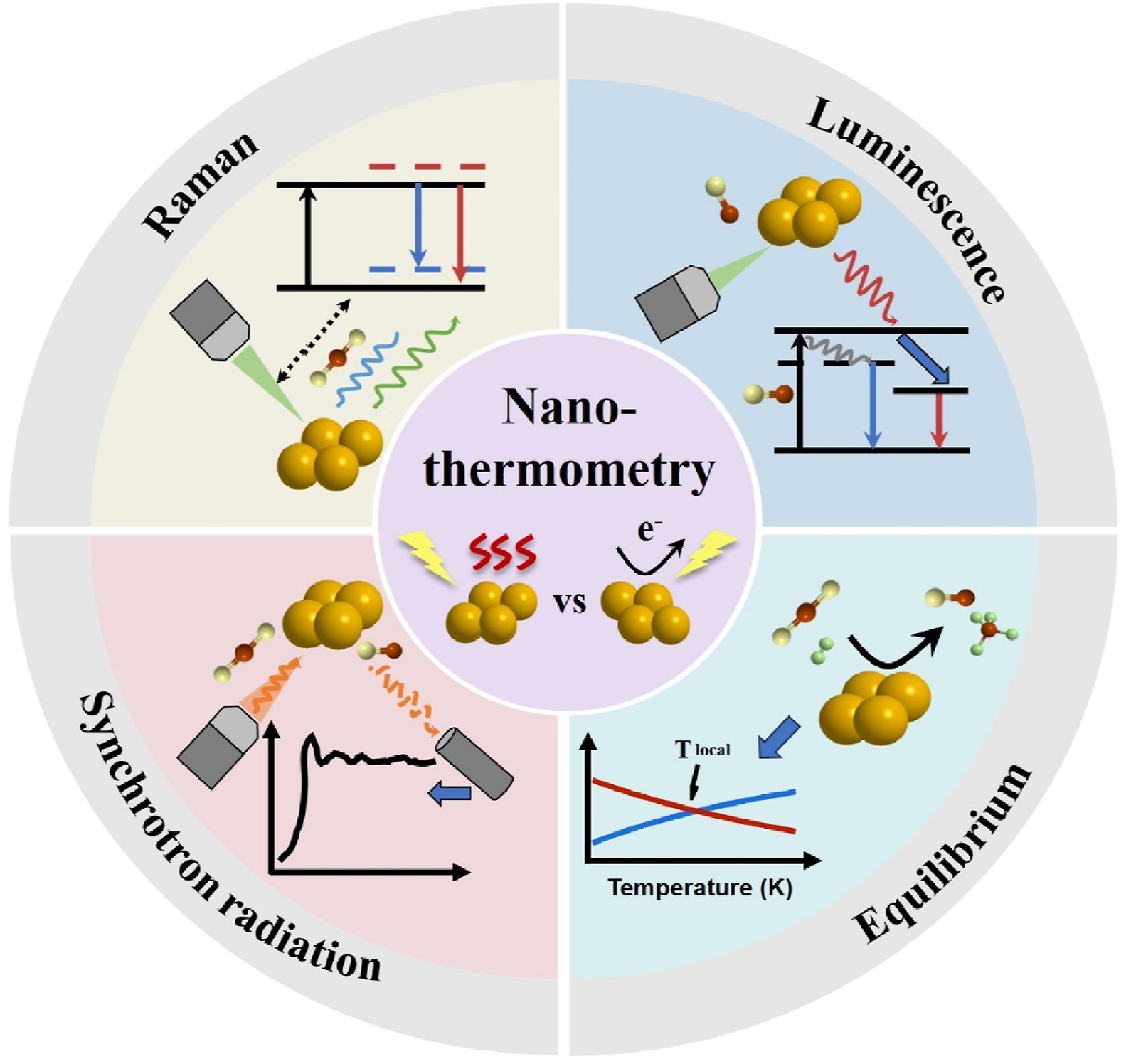
Despite these challenges, nano-thermometry
possesses great potentialss for highly sensitive, non-contact temperature
measurements with sub-microscopic resolution towards in-depth understanding on
optimized catalysis. Further technological advances of nano-thermometry in
photothermal catalysis could focus on developing generalized, high precision
and in-situ temperature measurement techniques under working conditions to
clearly distinguish between thermal and non-thermal contributions, and to
deepen understandings on photothermal catalytic reaction mechanisms, which
could, in turn, provide important design principles for efficient catalytic
systems. In addition, future nano-thermometry could be more integrated and
intelligent, incorporating real-time big-data processing and
principal-component analysis systems to carry out more accurate and efficient
temperature measurement. Finally, the development of nano-thermometry could be
combined with multi-spectroscopy technology to provide more comprehensive
solutions for catalytic reactions. These developments will help significantly
improve the accuracy and reliability of temperature measurement for catalytic
reactions.




- Address: Fuzhou High & New Technology Industrial Zone, Shangjie, Minhou, Fuzhou, Fujian 350108, China
- Tel: (86)-591-63173769, 63173770
- E-mail: cjsc@fjirsm.ac.cn