


Ir/Ni–N–C electrocatalyst with promoted CO-tolerance towards alkaline hydrogen oxidation reaction
Yiming Jin, Mingming Pan, and Wei Luo* Submit a Manuscript
Han Du, Shiyong Chu*, Chunchen Zhang, Yanjiao Ma*
Chin. J. Struct. Chem., 2026, 45(1), 100730. DOI: 10.1016/j.cjsc.2025.100730
January 1, 2026
ABSTRACT
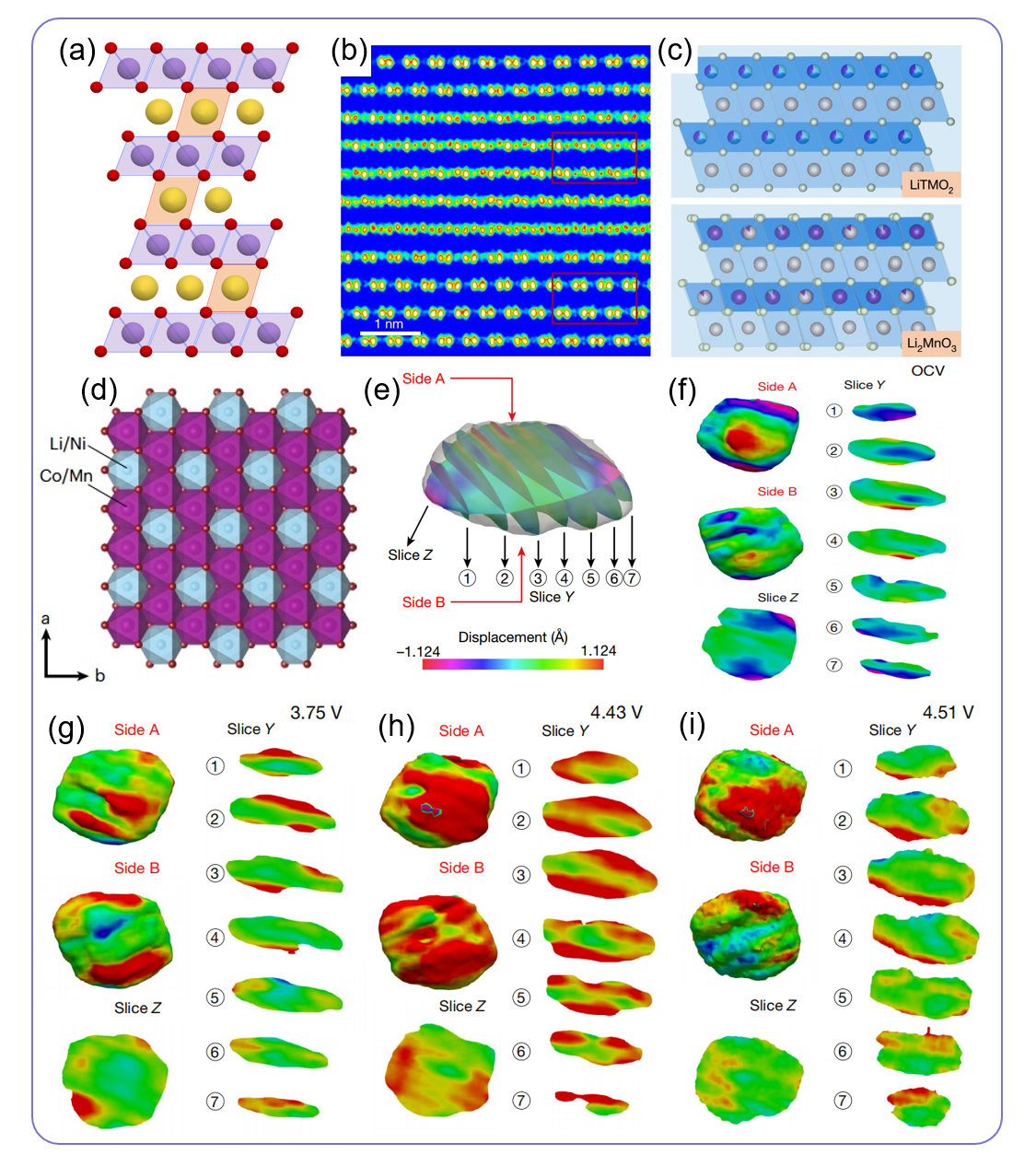
Despite the promising potential of
geometric constraint strategies in mitigating structural degradation induced by
stress, their scalable synthesis still faces critical challenges. Stabilizing
O2-phase configurations and achieving long-range superstructural ordering under
industrially viable conditions require the development of innovative and
cost-effective approaches that minimize lithium loss and defect formation. Looking forward, future research should prioritize the
advancement of in situ/operando techniques to enable precise stress mapping and
direct observation of cation–anion interactions at atomic resolution.
Multi-physics modeling integrating electrochemistry, mechanics, and ion
transport is essential to decipher complex degradation cascades. Furthermore,
combining geometric design with compositional optimization — such as entropy
engineering — and surface engineering may offer synergistic
solutions. Ultimately, bridging fundamental knowledge with practical synthesis
strategies will be key to guiding the design of next-generation
high-energy-density cathodes.




- Address: Fuzhou High & New Technology Industrial Zone, Shangjie, Minhou, Fuzhou, Fujian 350108, China
- Tel: (86)-591-63173769, 63173770
- E-mail: cjsc@fjirsm.ac.cn