


Recent progress in amorphous metal halides for optoelectronics
Shun-Shun Li, Kaifeng Wu*, Pengfei Cheng* Submit a Manuscript
Ye Su1, Han Meng1, Hongyi Gao*
Chin. J. Struct. Chem., 2026, 45(7), 100918. DOI: 10.1016/j.cjsc.2026.100918
July 1, 2026
ABSTRACT
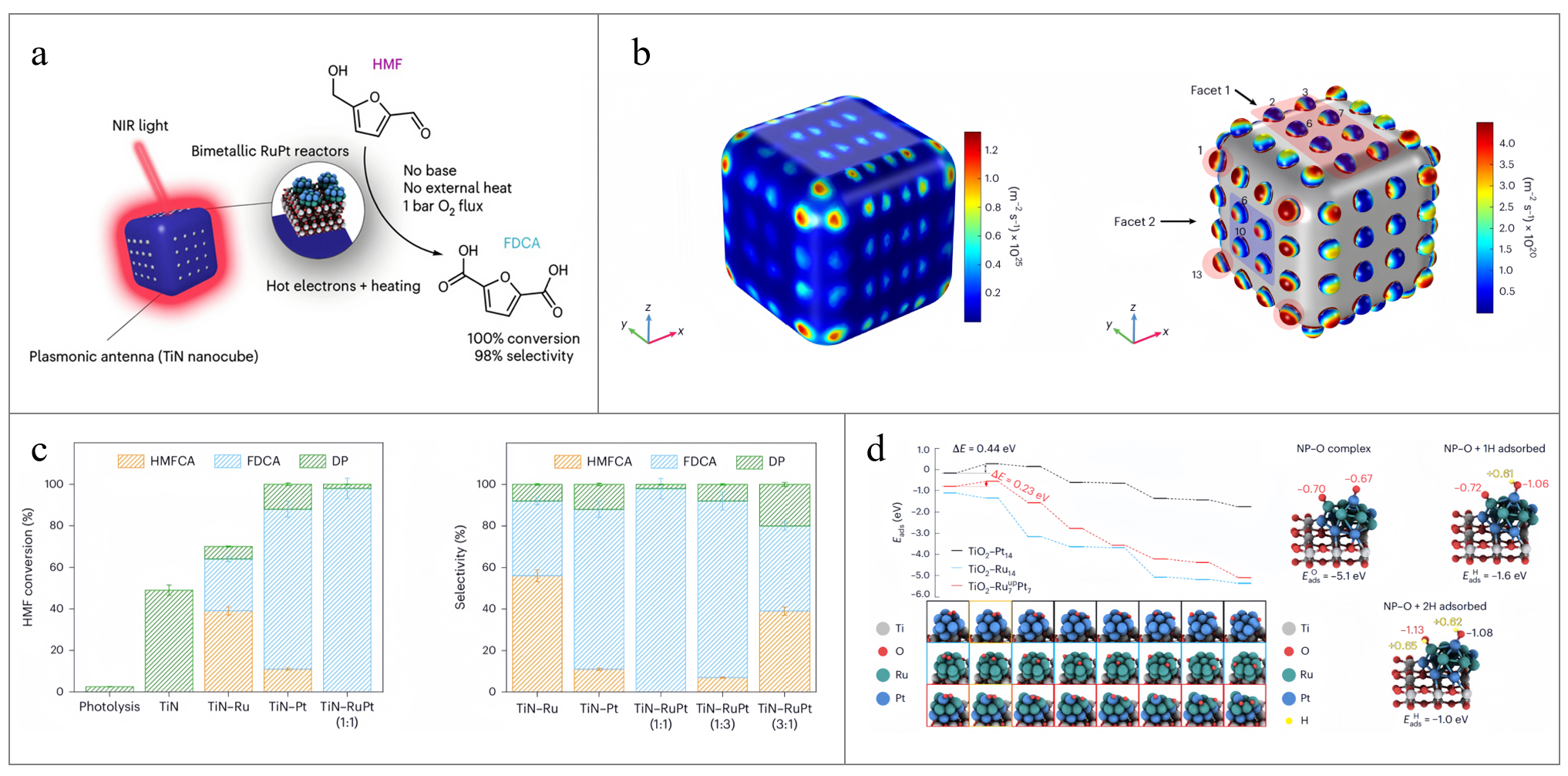
Despite its high performance, practical implementation of the TiN-RuPt system faces challenges regarding the high cost of noble metals and the potential for particle sintering during long-term operation[8,9]. Future directions should explore non-metallic plasmonic antennas, such as alternative transition metal nitrides (ZrN, HfN) or carbides, to reduce capital costs and improve durability[10]. This work exemplifies how rational integration of plasmonic light‑harvesting units with tailored bimetallic active sites can drive multi‑step selective oxidations under mild, base‑free conditions. It provides a compelling blueprint for the design of solar‑driven catalytic systems for sustainable chemical synthesis and biomass valorization.




- Address: Fuzhou High & New Technology Industrial Zone, Shangjie, Minhou, Fuzhou, Fujian 350108, China
- Tel: (86)-591-63173769, 63173770
- E-mail: cjsc@fjirsm.ac.cn