

Just Accepted
Just Accepted Articles have been posted online after technical editing and typesetting for immediate view. The final edited version with page numbers will appear in the Current Issue soon.
Submit a Manuscript

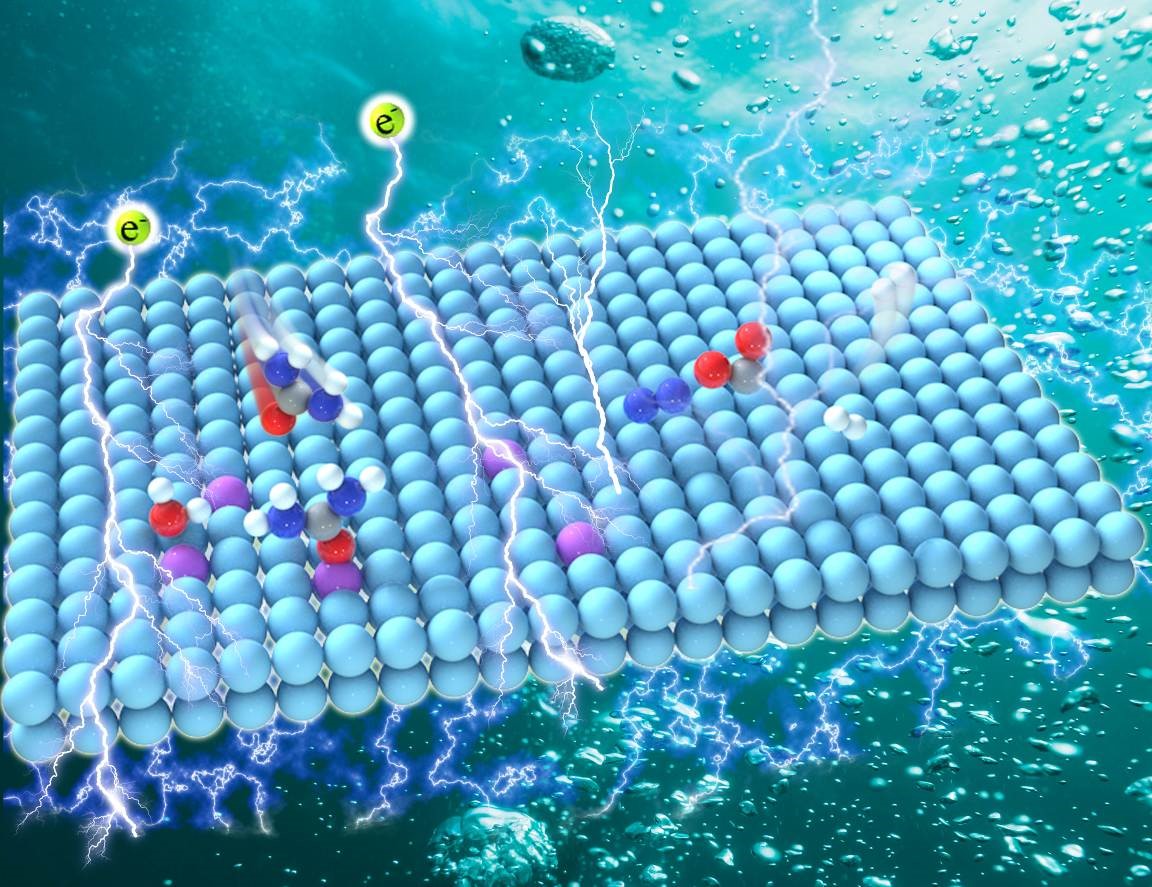
Co2P coupled Ni2P-Mn3P with tunable local d-band centers for efficient urea assisted water splitting
Hui Wang, Huipeng Zhao, Xiaoqiang Du*, Xiaoshuang Zhang
https://doi.org/10.1016/j.cjsc.2026.101135
d-band center regulation; Urea splitting; Electrocatalysis; Ni2P-Mn3P/Co2P; Density functional theory
ABSTRACT
It remains challenging to design high-efficiency electrocatalysts for urea splitting through the precise regulation of the d-band center via mono/bimetallic phosphides. This study, by constructing three-phase interface engineering through coupling with Co2P, successfully modulates the local electronic structure of Ni2P-Mn3P/Co2P for the first time, which exhibiting excellent catalytic performance. Specifically, the Ni2P-Mn3P/Co2P material achieves a low potential of 1.313 V at a current density of 10 mA cm-2 for the urea oxidation reaction (UOR). The two-electrode system composed of Ni2P-Mn3P/Co2P, applied for overall urea splitting, delivers a small operating voltage of 1.485 V at 10 mA cm-2, which is one of the best electrochemical performance reported up till now. Density functional theory (DFT) analysis prove that by coupling Co2P, the overall d-band center of the Ni2P-Mn3P/Co2P material is regulated, thereby optimizing the adsorption and desorption processes of the intermediate. Furthermore, in-situ Raman technology and X-ray photoelectron spectroscopy characterizations confirmed that the Ni and Mn sites undergo rapid oxidative reconstruction into their corresponding metal oxyhydroxide species, which in turn enables the UOR to exhibit excellent electrocatalytic performance. This study proposes a novel methodology for regulating the d-band center of catalysts to realize efficient urea decomposition.




- Address: Fuzhou High & New Technology Industrial Zone, Shangjie, Minhou, Fuzhou, Fujian 350108, China
- Tel: (86)-591-63173769, 63173770
- E-mail: cjsc@fjirsm.ac.cn
CN 35–1112/TQ, ISSN 0254–5861, Online ISSN: 2949-768X Copyright @ 2022 Chinese Journal of Structural Chemistry-www.Chinese Journal of Structural Chemistry.net. All Rights Reserved 闽ICP备2022002645号-1